
SMS Betting Rules: Signup, Subscription, Terms, and Regulations Explained
Authored by gicat.info, 19 Aug 2026
A text message sent to the wrong short code can accidentally enroll a bettor in a recurring subscription they never intended to join. This happens more often than most sportsbooks admit, and it's precisely why understanding the mechanics behind text-based wagering matters before a single bet gets placed. SMS betting operates on a different set of assumptions than app-based or desktop wagering, and those differences carry real financial and legal consequences.
Carriers, regulators, and sportsbooks each impose their own layer of requirements, and the overlap between them creates a system that rewards careful readers and penalizes anyone who skims past the fine print. For anyone unfamiliar with how these platforms verify identity or bill accounts, a good starting point is reviewing the official sms betting rules published by the operator, since these documents typically spell out cancellation procedures, age verification steps, and message frequency limits. Skipping that step is how disputes start.
What follows breaks down the entire lifecycle of text-based wagering: how accounts get created, what the recurring charges actually cover, which terms carry legal weight, and how regulators keep the whole system honest. Readers who finish this piece will know exactly what they're agreeing to before they send that first text.
How SMS Betting Works: The Basics
What Makes SMS Betting Different From App-Based Wagering
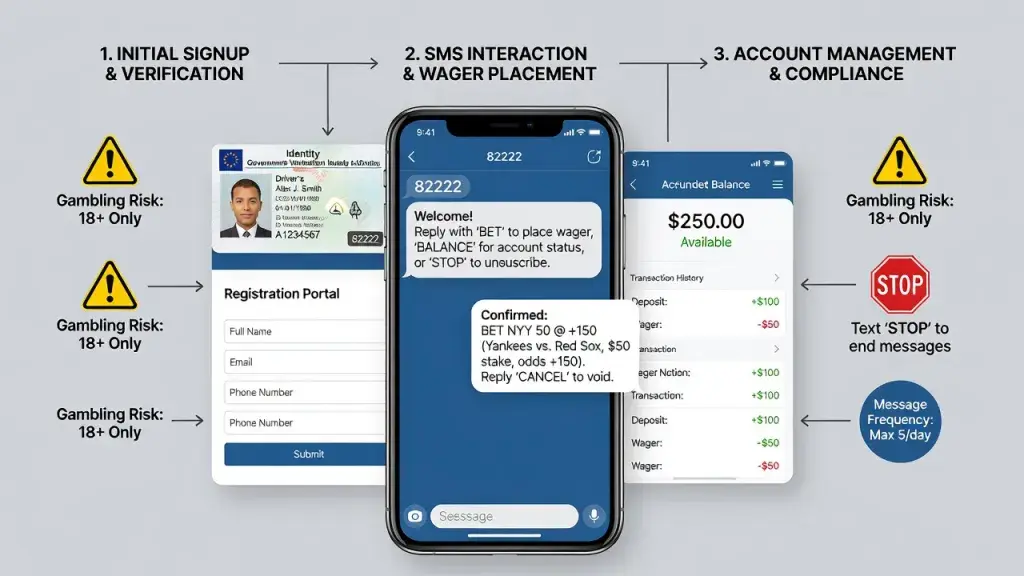
Text-based wagering strips away the graphical interface entirely. Instead of tapping through odds boards and bet slips, a user sends a short code - a team abbreviation, a bet type, a stake amount - and receives a confirmation reply. This format demands precision. A malformed message either gets rejected outright or, worse, gets misinterpreted by the parsing system on the operator's end, leading to a wager the customer never intended to place.
Why Operators Still Offer This Channel
Despite the dominance of mobile apps, SMS betting persists because it serves specific demographics: older bettors uncomfortable with app navigation, users in regions with unreliable data connections, and customers who prefer the speed of a single text over loading a full application. Carriers charge standard messaging rates unless the operator has negotiated a toll-free short code, and that distinction affects what a bettor eventually pays.
The Role of Short Codes and Keywords
Every legitimate SMS betting service uses a registered short code, typically five or six digits, paired with specific keywords that trigger different actions - placing a bet, checking a balance, or opting out entirely. These codes are registered with mobile carriers and monitored for compliance, which is part of why unregistered or informal betting-by-text schemes tend to violate SMS betting regulations from the outset.
SMS Betting Signup: Step-by-Step Requirements
Identity Verification Before the First Bet
No sportsbook operating within a regulated market allows wagering without confirming the bettor's identity, age, and location. SMS betting signup typically requires an initial registration through a web portal or app, where the user submits a government-issued ID and links a phone number. Only after that verification clears does the number get authorized to place wagers via text.
Linking Payment Methods and Account Numbers
Because a text message can't process a credit card form, SMS wagering relies on a pre-funded account balance or a linked payment method established during onboarding. The bettor deposits funds through the standard web or app interface, and the SMS channel simply draws against that existing balance. This separation protects both the operator and the customer from unauthorized charges tied directly to a phone bill.
Common Signup Mistakes That Delay Approval
- Submitting a phone number that doesn't match the name on the verified ID
- Skipping the address confirmation step required in most licensed jurisdictions
- Attempting to register from a state or country where the operator lacks a license
- Ignoring the confirmation text that finalizes SMS enrollment
Each of these missteps triggers a manual review, which can stall access to the SMS channel for days rather than the minutes most users expect.
Understanding SMS Betting Terms
Reading the Fine Print on Bet Confirmation
Every operator's SMS betting terms specify exactly what constitutes a confirmed wager. Some require a reply text acknowledging the odds before the bet locks in; others treat the initial message as final and binding the moment it's received. This distinction matters enormously if odds shift between the sent message and the system's processing time.
Message Frequency and Rate Disclosures
Terms documents also disclose how many messages a subscriber can expect weekly - promotional alerts, odds updates, account notifications - and at what rate, if any, those messages are billed. Standard carrier rates typically apply unless the terms explicitly state otherwise, and burying this detail in a lengthy terms page is a common source of billing complaints.
Liability Clauses for Delayed or Failed Messages
Text messages can arrive late, get lost entirely, or duplicate due to carrier network issues. SMS betting terms almost universally include a liability disclaimer stating the operator isn't responsible for wagers lost or delayed because of network failure outside its control. Bettors relying exclusively on SMS should understand this risk before treating it as their primary wagering method for time-sensitive bets like in-play wagering.
SMS Betting Subscription: Costs and Cancellation
How Subscription Billing Actually Works
Unlike a per-bet transaction fee, an SMS betting subscription often functions as a recurring charge covering access to the text-based service itself - separate from the wagers placed within it. Some operators bundle this access at no extra cost as a loyalty perk; others charge a flat monthly fee for premium alert services like injury updates or line movement notifications.
Opting Out Without Losing Account Access
Canceling the SMS betting subscription should never affect the underlying betting account balance or verification status. Standard practice involves texting a keyword like "STOP" to the short code, which halts messages within a defined window, often 24 to 48 hours, while leaving the web and app channels fully functional.
Hidden Fees Bettors Often Overlook
- Per-message charges from the mobile carrier, independent of the operator's own fees
- Premium tiers for real-time odds alerts beyond basic wager confirmations
- International roaming charges if betting while traveling outside the home network
Reading the subscription tier descriptions before opting in avoids the surprise of a charge that wasn't clearly tied to actual wagering activity.
SMS Betting Regulations Across Jurisdictions
Why Regulation Varies So Widely by Region
Gambling law is fragmented by design in most countries, with individual states or provinces setting their own licensing standards. SMS betting regulations in one jurisdiction might require explicit double opt-in consent for every promotional text, while a neighboring region imposes no such requirement at all. Operators serving multiple markets must maintain separate compliance frameworks for each.
Consumer Protection Standards for Text-Based Wagering
Regulated markets typically mandate clear opt-out instructions in every message, restrictions on contacting self-excluded individuals, and caps on message frequency to prevent harassment. These protections exist specifically because text messaging, unlike app notifications, reaches a device that most people treat as inherently personal and are less inclined to ignore.
Penalties for Non-Compliant Operators
Operators that violate messaging regulations face fines, suspension of their SMS channel, or in severe cases, revocation of their full gambling license. Regulatory bodies increasingly treat unsolicited betting texts as a serious consumer complaint category, comparable to spam enforcement in other commercial sectors.
Staying Compliant and Protecting Yourself as a Bettor
Verifying an Operator's Legitimacy Before Signing Up
Before submitting personal information through SMS betting signup, confirm the operator holds an active license in your jurisdiction. Licensing bodies typically maintain public registries, and cross-referencing the short code against the operator's official documentation is a quick way to rule out impersonation schemes.
Keeping Records of Every Confirmed Wager
Screenshots and saved message threads serve as the primary evidence if a dispute arises over a bet's timing or terms. Given that SMS lacks the audit trail of an app interface, maintaining a personal record protects the bettor far more than relying on the operator's system logs alone.
Knowing When to Escalate a Complaint
If a sportsbook fails to honor its own stated terms - refusing a legitimate cancellation request, for example - the next step is filing a complaint with the relevant gambling commission rather than continuing to dispute the issue directly with customer service alone.
Frequently Asked Questions
Can I place a bet via SMS without first creating an online account?
No. Every licensed operator requires identity and age verification through a web portal or app before authorizing the phone number for SMS wagering. The text channel activates only after that initial registration clears.
Will I be charged for messages I receive but don't respond to?
Standard carrier messaging rates may apply to any text received, regardless of whether you reply. Some operators absorb this cost through toll-free short codes, but this varies by provider and should be confirmed in the terms before enrolling.
What happens if my bet confirmation text arrives after the odds have changed?
Most operators honor the odds available at the moment the system processes the message, not the moment it was sent. If the delay causes a significant discrepancy, the bet may be voided and the stake refunded, depending on the specific terms of that operator.
Is SMS betting legal everywhere online betting is legal?
Not necessarily. Some jurisdictions permit online and app-based wagering but impose additional restrictions or outright bans on SMS-based transactions due to concerns over consent and message tracking. Always confirm regional rules separately from general online betting legality.
How do I stop unwanted promotional texts without closing my account?
Texting a designated opt-out keyword, commonly "STOP," to the operator's short code typically halts promotional messages within one to two business days while leaving your betting account and balance untouched.
Can a minor accidentally gain access to SMS betting through a family member's phone?
The verification process ties the phone number to a specific verified adult identity, but shared devices remain a real risk. Operators recommend setting up device-level PINs or parental controls separate from the betting platform's own safeguards.